
I’m sitting in the basement-level classroom surrounded by my ten classmates who, by my estimation, have far more natural academic ability than me. The sunlight streams in through the ground-level windows and the yellow, orange and red leaves covering the trees in the adjacent quad fill the window frames. The radiant autumn beauty presents a stark contrast to the dullness I feel on the inside – some combination of self-doubt and embarrassment. I look down at the large C- in red ink at the top of the page. Mr. Williams just handed back our papers in English class. It’s the first semester of 11th grade and I’ve been at boarding school for two months. Every day since my first class, I’ve asked myself: What am I doing here? Everyone’s so much smarter than me.
I feel a hand on my shoulder as the bell rings and know instinctively that it’s Mr. Williams. “Stick around for a minute, Jay. I’d like to chat.”
Perfect – now, on top of feeling like crap for weeks, I get to sit here after class and listen to a lecture from the teacher about how I don’t stack up. About how I don’t belong here. About how I was admitted for my athletic ability, and that the admissions committee had made a mistake.
I imagine what it will be like to call my parents and tell them I want to come home. I think about how much they believe in me, and about how disappointed they’ll be. The rest of the students shuffle out of class and Mr. Williams pulls up a chair so that we’re face-to-face, three feet apart.
Here we go, I think, anticipating a painful and embarrassing talking-to.
“So, Jay, first term on campus. How are things going?” His eyes are soft, his gaze relaxed and free of emotion. His lips are turned up ever so slightly underneath his grey-brown moustache. Just a hint of a smile that says “everything’s alright. There’s no danger here. I just want to get to know you.”
For the next seven minutes, he asks me questions about my experience on campus that have nothing to do with English class. He asks about my interests, my impressions, my feelings. He listens. He nods. He asks for clarification. I’m surprised at the relief I feel as the conversation carries on. Rather than adding stress, he’s relieving it. Then, when the time is right, he asks me how I feel about my paper.
“I just don’t think I’m a very good writer,” I say in a downtrodden tone. “And I don’t think I’ll ever be one.”
“You’re right”, he says. “You’re not a great writer.”
Huh? I wasn’t expecting that level of honesty.
“But you ARE a great reader. And being a great reader is the first step to becoming a good writer.”
I feel an energizing jolt of confidence. I had secretly been harbouring a belief in my ability to interpret literature and extract meaningful connections and insights. It was one of the few strengths I could honestly point to in my academic life. I now suddenly feel seen, perhaps for the first time since my arrival on campus.
“And,” he says, his lips now curling higher into a wide grin, “if you’re being honest, how hard have you really tried?”
Ouf. A truth that tastes like cough syrup on the way down. Bitter but necessary to get better.
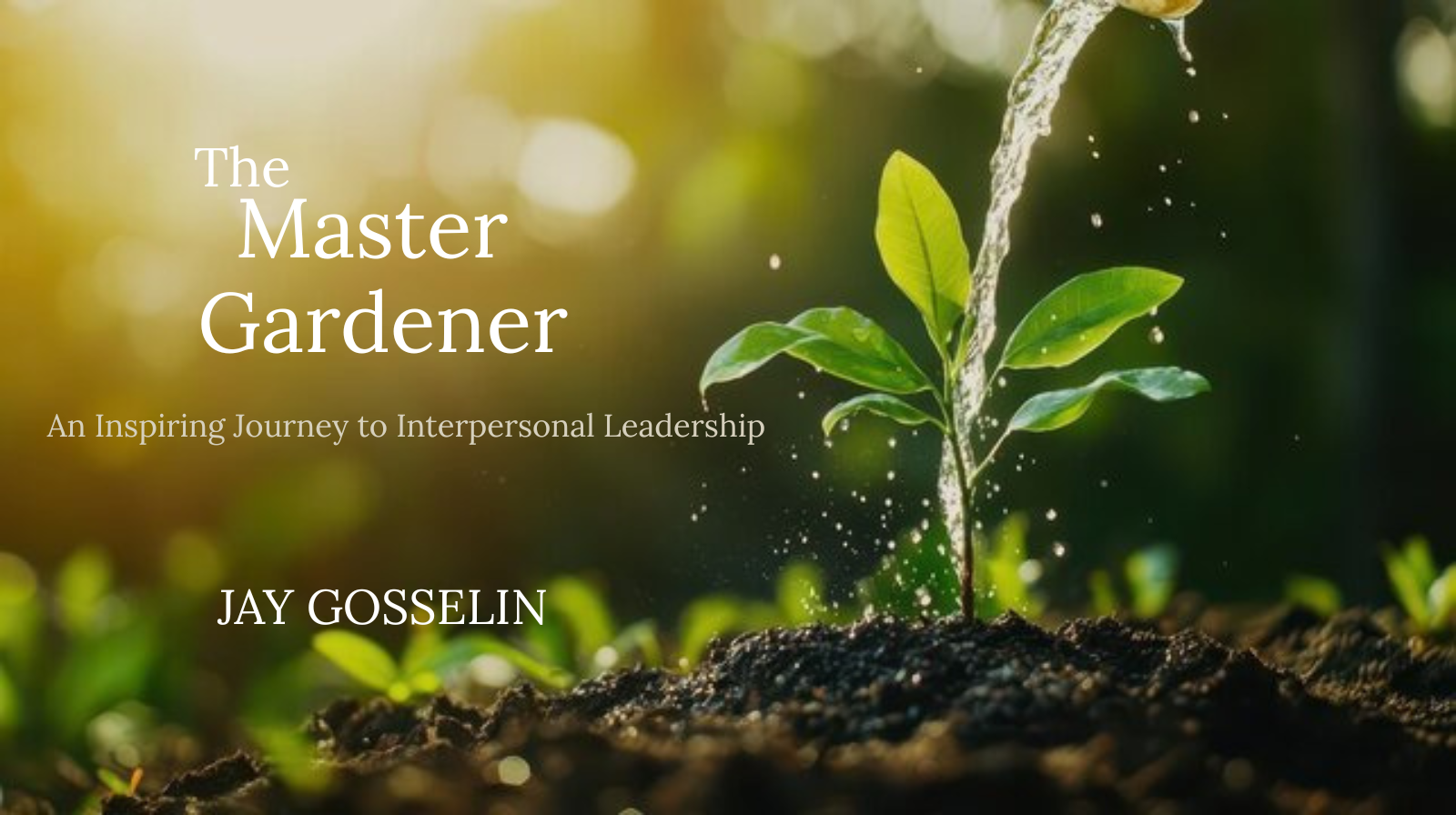
I don’t understand it at this moment, but Mr. Williams has just given me a seven minute masterclass on Interpersonal Leadership. I would eventually come to understand that he was building a certain kind of trust with me in that conversation. It’s a kind of trust that can be established more quickly than we tend to believe. It’s a type of trust that we sorely need more of in our world today. Beyond building trust, he planted a tiny seed in my mind that would eventually grow into a plant and bear fruit. It took 17 years for the plant to sprout, and another 10 years for this book to come to fruition.
Stay connected as we approach the book release date! Sign-up for The Master Gardener Pre-launch community if you haven’t yet and share with someone you think would enjoy this book.
Best,
Jay
Stay connected as we approach the book release date! Sign-up for The Master Gardener Pre-launch community if you haven’t yet and share with someone you think would enjoy this book.
Best,
Jay